
Homework can turn even the calmest households upside down – but it doesn’t have to. Between wanting to help and wanting your child to stand on their own, it’s easy to feel unsure about how much support to give. The real challenge isn’t the worksheet or the spelling list; it’s making your child feel guided, not rescued. This guide, divided up into age groups, shows how to find that steady middle ground where children feel capable – and you remain calm too.
Why This Balance Matters
Homework is not just about getting answers right. It is about building thinking skills, resilience and independence over time.
When adults step in too quickly, work may look polished, but the learning underneath is fragile. Children miss the struggle that helps ideas stick. On the other hand, leaving them entirely on their own can feel overwhelming and discouraging.
The aim is steady, age-appropriate support: guiding, questioning, organising and encouraging – without substituting adult ability and experience for a child’s developing skills.
The Difference Between Support and Substitution
Support means:
- Asking questions instead of giving answers
- Helping a child break down instructions
- Creating routines and structure
- Encouraging effort and perseverance
Substitution means:
- Rewriting sentences to make them “sound better”
- Solving the maths problem to speed things up
- Designing the poster or correcting every line
- Taking over because it feels easier
The long-term goal is not neat homework. It is an independent learner who can think, plan and recover from mistakes.
Children benefit most when mistakes are treated as part of learning, not something to be worried about.
Primary Years: Build Habits (Reception to Year 6)
In the primary years, homework is about routine, confidence and basic skills. This is the time to lay foundations.
Set Clear Routines
- Agree on a regular homework time.
- Create a simple, distraction-free space.
- Keep supplies ready so “I can’t find a pencil” doesn’t derail everything.
Predictability reduces resistance. Homework becomes part of the rhythm of the week rather than a nightly battle.
Focus on Effort Over Perfection
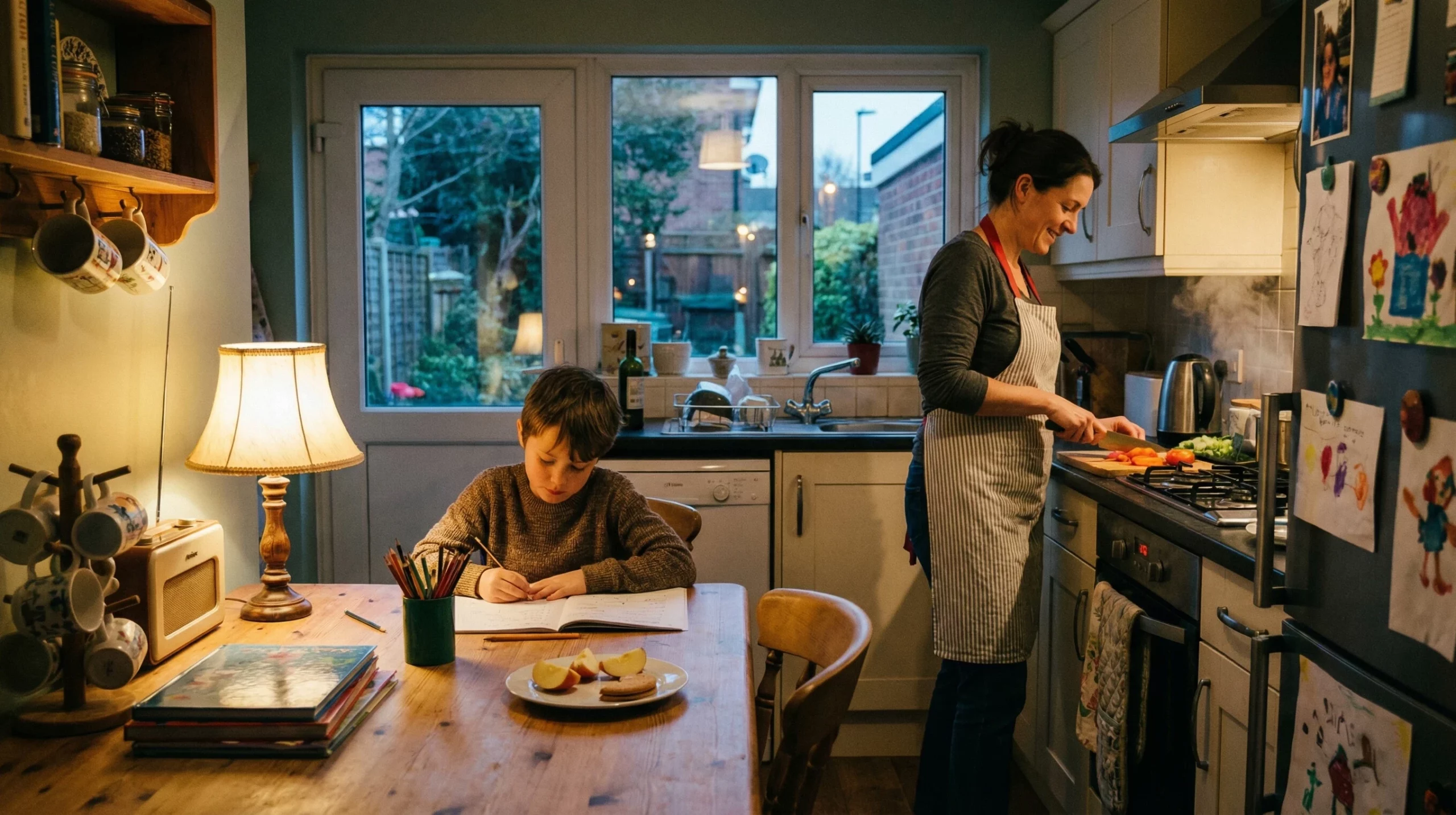
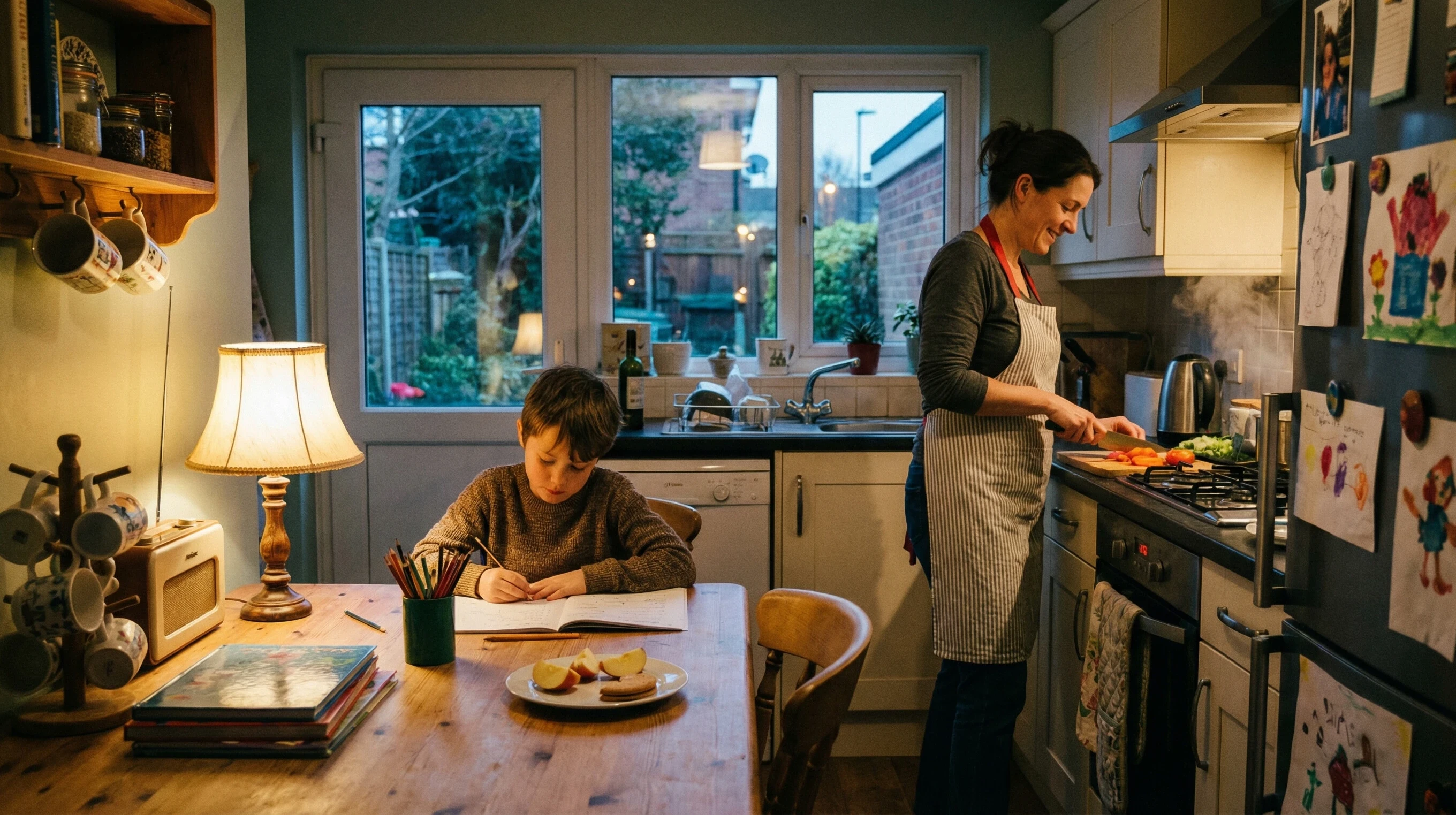
At this stage, attitude matters as much as accuracy. Praise perseverance. Notice improvement. Celebrate small wins. You do not need to hover over your child the entire time. Let them get on for a little bit by themselves while you start preparing dinner or do some other small task.
If something feels hard:
- Take a short break.
- Try one question together.
- Return to independent work.
Confidence grows when children feel capable, not corrected at every step.
Use Questions to Spark Thinking
Instead of supplying answers:
- “What do you think comes next?”
- “How did you work that out?”
- “Can you show me another way?”
For reading, take turns. Encourage sounding out. Talk about the story. For maths, use number lines, counters or drawings. For writing, brainstorm ideas aloud before they begin.
Gradually step back. Stay nearby at first, then move further away as independence grows.
The aim in primary school is simple: build habits that make learning feel normal and manageable.
Early Secondary: Build Structure (Years 7–9)
The move to secondary school is a genuine leap. Homework increases. Organisation suddenly matters.
This is the stage for building systems.
Strengthen Organisation
- Help set up a planner or digital calendar.
- Break larger tasks into smaller deadlines.
- Check in regularly, but avoid taking control.
If work is forgotten, treat it as a problem to solve, not a crisis to fix.
Develop Research and Revision Skills
Show how to:
- Identify reliable websites.
- Avoid copying and pasting.
- Turn notes into flashcards or mind maps.
- Revise in short, focused bursts (for example, 20 minutes on, 5 minutes off).
Quiz them. Discuss ideas. But leave the actual writing and note-making to them.
Encourage self-advocacy – the ability to speak up for their own needs
If a child is stuck, support them in approaching the teacher themselves. Learning how to ask for clarification is a life skill.
At this stage, the role shifts from sitting beside them to standing behind them.
GCSE Years: Build Responsibility (Years 10–11)
GCSE years bring pressure, coursework and more complex thinking. This is where independence must strengthen.
Support Planning, Not Production
For essays:
- Discuss possible arguments.
- Talk through structure.
- Ask how evidence supports their point.
Then step back. The writing belongs to them.
For maths and science:
- Ask them to explain their method.
- Review concepts together.
- Use trusted resources such as BBC Bitesize or Corbettmaths for clarification, but avoid solving problems for them.
Help Them Find Effective Revision Methods
Introduce options:
- Flashcards
- Mind maps
- Practice papers
- Self-testing
Encourage experimentation. Different subjects may require different approaches. And yes, if you have time, you can test them by asking them to explain a topic – and perhaps you can learn something new yourself.
Watch Wellbeing
Stress can rise quickly during GCSE years. Maintain:
- Regular meals
- Movement and fresh air
- Realistic revision blocks
- Proper sleep
Of course you want them to do well, but do not transfer your anxiety on to them. Hovering increases anxiety. Calm confidence from parents reduces it.
This stage is about trusting the habits built earlier and allowing responsibility to take root.
A Level: Step Back (Years 12–13)
A level study demands ownership. At this point, students need space to manage their workload, mistakes and time.
Respect Growing Independence
- Allow them to choose when and how they revise.
- Offer discussion, not direction.
- Provide resources if requested.
If university is the goal, support research around UCAS deadlines and requirements – but leave applications and personal statements in their hands.
Support Advanced Skills
For extended projects:
- Discuss ideas.
- Ask probing questions.
- Proofread lightly if invited.
Avoid editing content or restructuring arguments for them. Academic integrity matters, and confidence grows from doing the work independently.
Sometimes the most helpful action is restraint.
Common Mistakes Parents Make
- Correcting every error before submission
- Rewriting awkward sentences
- Taking over projects that look “messy”
- Micromanaging revision timetables
- Equating high grades with good parenting
- Panicking when a child struggles
Struggle is not failure. It is practice.
Homework is not a performance for adults. It is training for independence.
Final Practical Checklist
Before stepping in, ask:
- Have they read the instructions properly?
- Have they tried it on their own first?
- Can they explain what they are stuck on?
- Would a question help more than an answer?
- Is this about learning – or about making it look better?
Across every stage of the UK system, the goal remains the same: move gradually from close support to confident distance.
Children do not need perfect homework.
They need steady guidance, clear boundaries, and the space to grow into capable, independent learners. Remember – this is a long-term aim, not a nightly test. Progress will not be perfect – but consistency matters far more than perfection.
“If you’re unsure how AI tools fit into homework routines, you may find this guide helpful…[link]