
Screen Time Series: A Parent’s Guide Part Nine
Screen-free time becomes much easier when you have a few activity ideas ready to go. Rather than trying to invent something on the spot when a child is already restless, it helps to keep a list of possibilities for different moods, ages, and energy levels.
Dip into these ideas during screen-free weekends, when children announce they’re bored, or whenever your family needs a gentle reset from devices. Many parents find it helpful to print a short list of favourites and stick it on the fridge — that way children can choose an activity themselves, which means one less decision for you.
🌿 Outdoor Adventures
Fresh air and a change of scenery can quickly reset everyone’s mood — and outdoor activities don’t need to be complicated or expensive. Even a short walk somewhere familiar can feel like a small adventure.
- Nature walks or local hikes
- Bike rides around the neighbourhood
- Garden or neighbourhood scavenger hunts
- Picnics in the park
- Camping in the back garden
- Cloud spotting or stargazing on a clear night
- Feeding ducks or visiting a local nature reserve
- Building a birdhouse, planting flowers, or helping with a community garden
⚡ High-Energy Outdoor Play
Sometimes children simply need to move. Active play is one of the most effective ways to release built-up energy and lift everyone’s mood — including yours.
- Bike rides or scooter races
- Back garden obstacle courses using everyday items
- Pavement chalk drawing competitions
- Treasure hunts with hidden clues around the garden or neighbourhood
- Water balloon games in warm weather
- Relay races or a mini sports day
- Skipping rope challenges
- Simple ball games in the garden or at the park
- Tennis ball wall challenges — a classic throw‑and‑catch game with fun tricks
Local parks and community groups often organise seasonal sports activities where children can try something new and meet friends outside of school.
🍕 Cooking and Baking Together
The kitchen is one of the most naturally relaxed places for family time. Cooking together builds confidence, teaches practical skills, and produces something everyone gets to enjoy at the end.
- Baking cookies, cupcakes, or brownies
- Homemade pizza with individual toppings chosen by each person
- Pancake breakfasts with creative toppings
- Letting children plan and cook one family meal from start to finish
- DIY snack platters or “make your own sandwich” dinners
- Homemade smoothies or ice lollies
- Decorating biscuits or cupcakes
Younger children can help with stirring, pouring, or choosing vegetables. Older children and teenagers often enjoy researching recipes independently or trying dishes from different cultures — give them free rein and you might be pleasantly surprised.
🎨 Crafts and Creative Projects
Creative activities encourage patience, imagination, and problem-solving — and most don’t require expensive materials. A well-stocked craft box is one of the most useful things a family can have to hand.
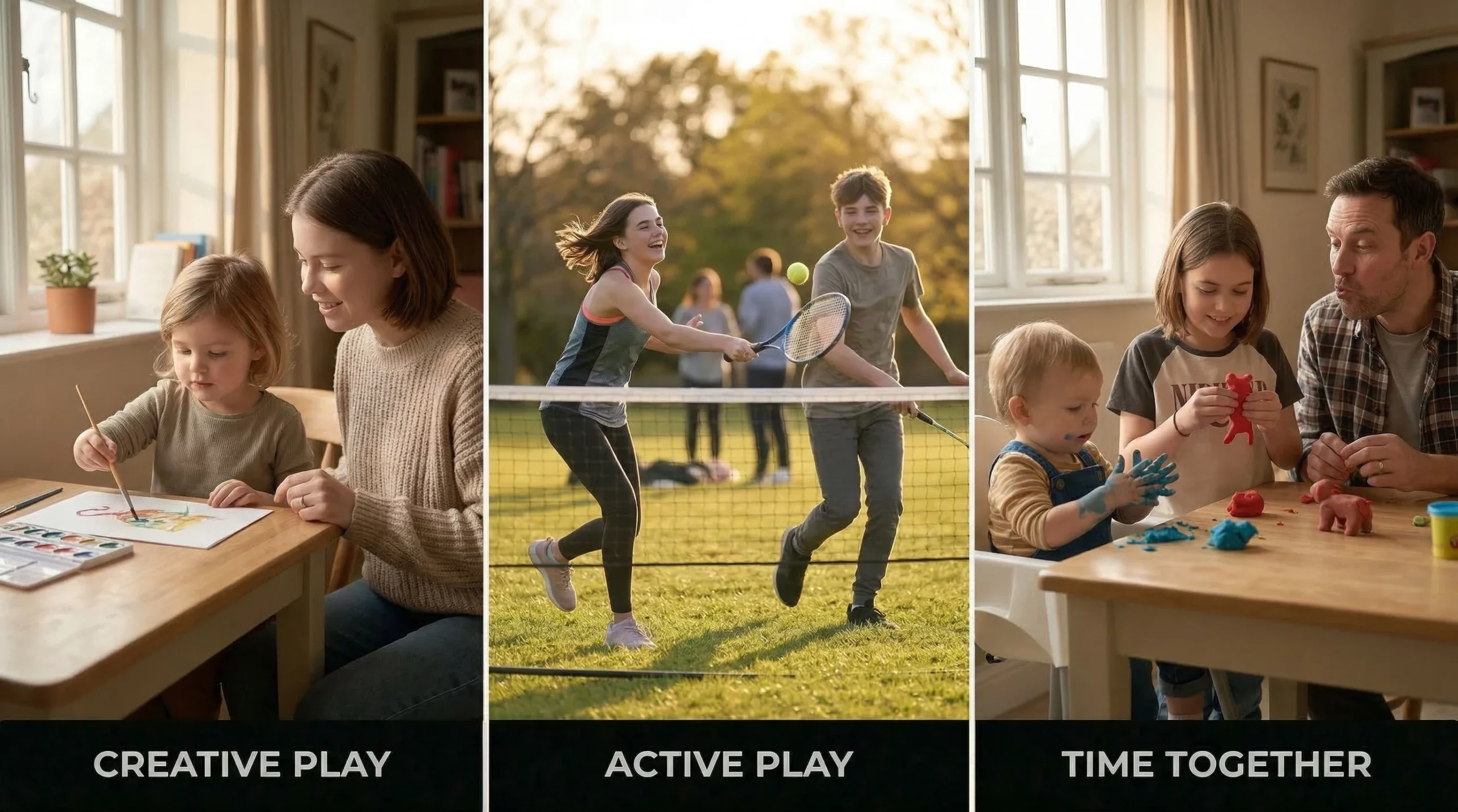
- Drawing, painting, or watercolours
- Scrapbooks or memory books using photos, tickets, and mementos
- Building simple bird feeders from recycled materials
- Friendship bracelets or simple jewellery making
- Designing and building a homemade board game
- Creating comics or mini storybooks
- Building models from LEGO, cardboard, or recycled materials
- PlayDough — bought or homemade — keeps little hands busy for hours
- Collage projects using old magazines or newspapers
- Tie-dye T-shirts or tote bags
- Origami projects — plenty of beginner guides are available in libraries or as printable sheets
Libraries and community centres often offer free craft afternoons or workshops that can introduce children to new ideas and new friends.
🎲 Games, Puzzles, and Challenges
Board games and puzzles are a wonderfully simple way to bring a family together — no preparation, no expense, and they work for almost every age.
- Classic board games and card games
- Family tournaments with a running scoreboard
- Large jigsaw puzzles left out on a table to return to gradually across the weekend
- Dominoes or simple strategy games
- Inventing new rules or variations for familiar games
- Word challenges — animals, places, or foods beginning with a certain letter, or the classic “I went to market and I bought…”
Even a short game on a quiet afternoon can quickly shift the atmosphere in a house.
📚 Quiet-Time Activities
Not every moment needs to be busy. Quieter activities help children — and adults — slow down, recharge, and simply be still for a while.
- Drawing or doodling freely, without a goal
- Colouring books
- Writing DIY comics or short illustrated storybooks
- Scrapbooking
- Building models
- Sticker books or sticker collage projects
- Origami
- PlayDough or modelling clay — simple, absorbing, and perfect for quiet play
- Journalling or gratitude lists — even young children can draw pictures of things they’re thankful for
- Family reading time, where everyone sits down with their own book — a particularly calm way to end a Sunday afternoon – perhaps with a mug of hot chocolate in winter and a cool drink or bowl of ice cream in summer
🎾 Activities That Appeal to Teenagers
Teenagers are often harder to tempt away from screens, so activities that feel social, creative, or genuinely their own idea tend to work best. Resist the urge to over-organise — teens often engage better when given a loose brief and left to run with it.
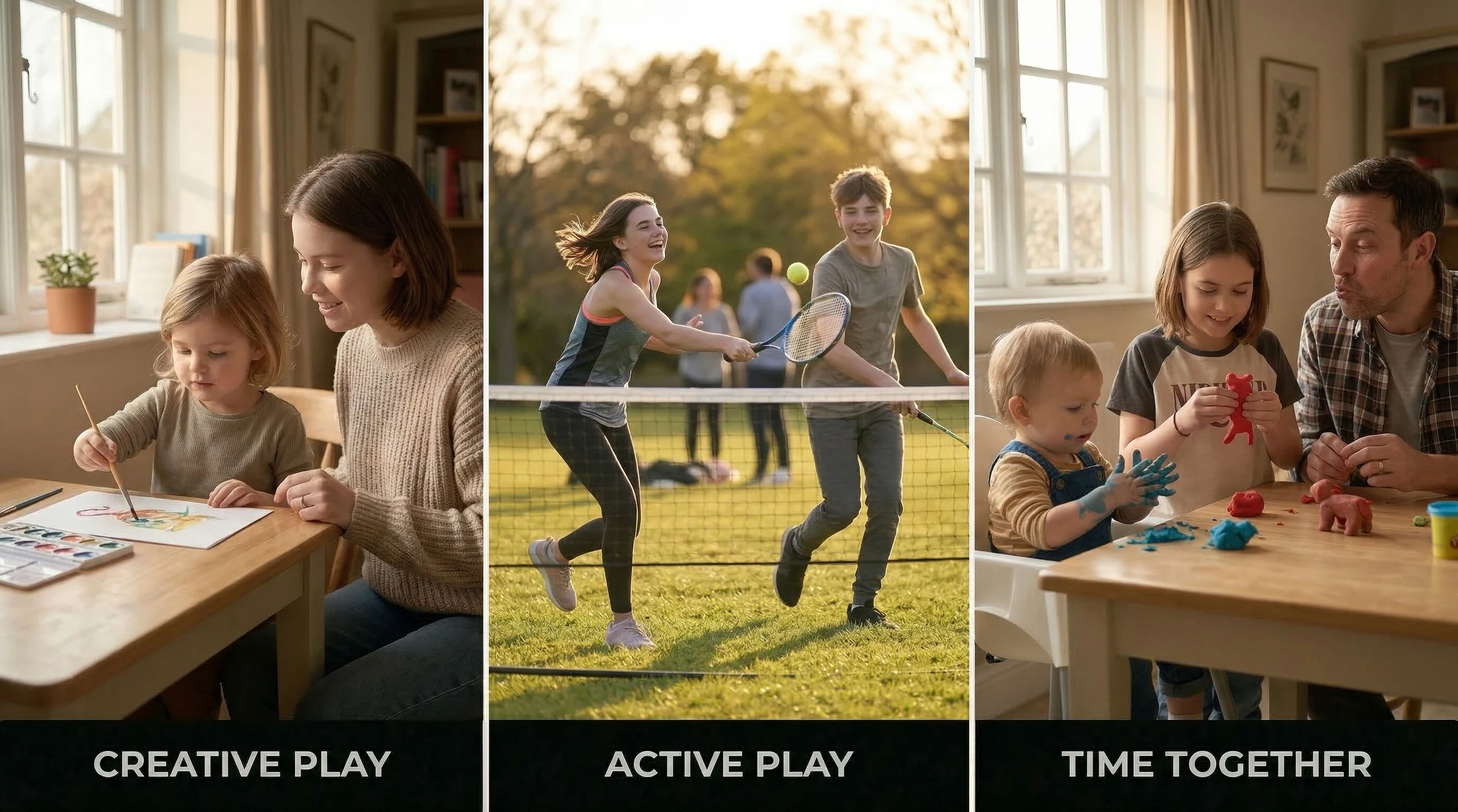
- Casual sports: tennis, basketball, badminton, or a kickabout in the park
- Photography walks or photo challenges with a disposable camera
- Cooking challenges — give them a handful of ingredients and a time limit
- Back garden hangouts with friends
- DIY room makeover or reorganisation projects
- Modelling clay projects
- Music sessions, jam nights, or making a playlist for a family meal
- Volunteering locally — many teenagers find this more meaningful than expected
- Photo scavenger hunts around the neighbourhood
Inviting teenagers to plan or lead an activity — rather than having one organised for them — makes a significant difference to their willingness to join in.
⚡ Quick “I’m Bored” Fixes
Sometimes children just need a two-minute spark to get them going. These require almost no preparation but can quickly turn a flat afternoon into something fun:
- Balloon volleyball or balloon tennis indoors
- Blowing soap bubbles in the garden
- Paper aeroplane contests — distance, accuracy, or most creative design
- Tallest tower challenges using books, blocks, or whatever’s to hand
- Sock-ball basketball into a laundry basket
- Five-minute tidy races
- Drawing or doodle challenges — set a silly subject and a one-minute timer
- “Find something beginning with…” scavenger games around the house
📦 The Boredom Box
One of the most practical things you can do is put together a simple “boredom box” — a basket or box kept somewhere accessible that children can go to when they’re at a loose end.
It might contain:
- Craft supplies — paper, glue, scissors, colouring pens, stickers, old catalogues
- Puzzle books, colouring books or activity pads
- A pack of balloons
- Soap bubbles
- Tubs of PlayDough
- A deck of cards
- Simple challenge cards you’ve written yourself (“Build the tallest tower you can, using only things from the living room”)
Rotating the contents and refreshing them every month or so keeps it interesting. Children who know the boredom box exists are far less likely to go straight to a screen when they don’t know what to do with themselves.
A Final Thought
Screen-free time doesn’t need to be elaborate, perfectly planned, or Instagram-worthy. Simple activities and shared laughter all play a role in healthy, happy childhoods.
The goal was never to remove screens completely — it was to make space for other things too. And often it’s the smallest, most unplanned moments — a puzzle at the kitchen table, a spontaneous game with a tennis ball in the garden, an afternoon that went somewhere nobody expected — that children remember long after the screen time is forgotten.
This is Part Nine of the Screen Time Series: A Parent’s Guide. We hope the series has been useful — and that your family finds its own balance that works for you.