
Screen Time Series: A Parent’s Guide (Part 3)
Screen Time and Primary-Age Children
Finding balance as school, games, and friendships go digital
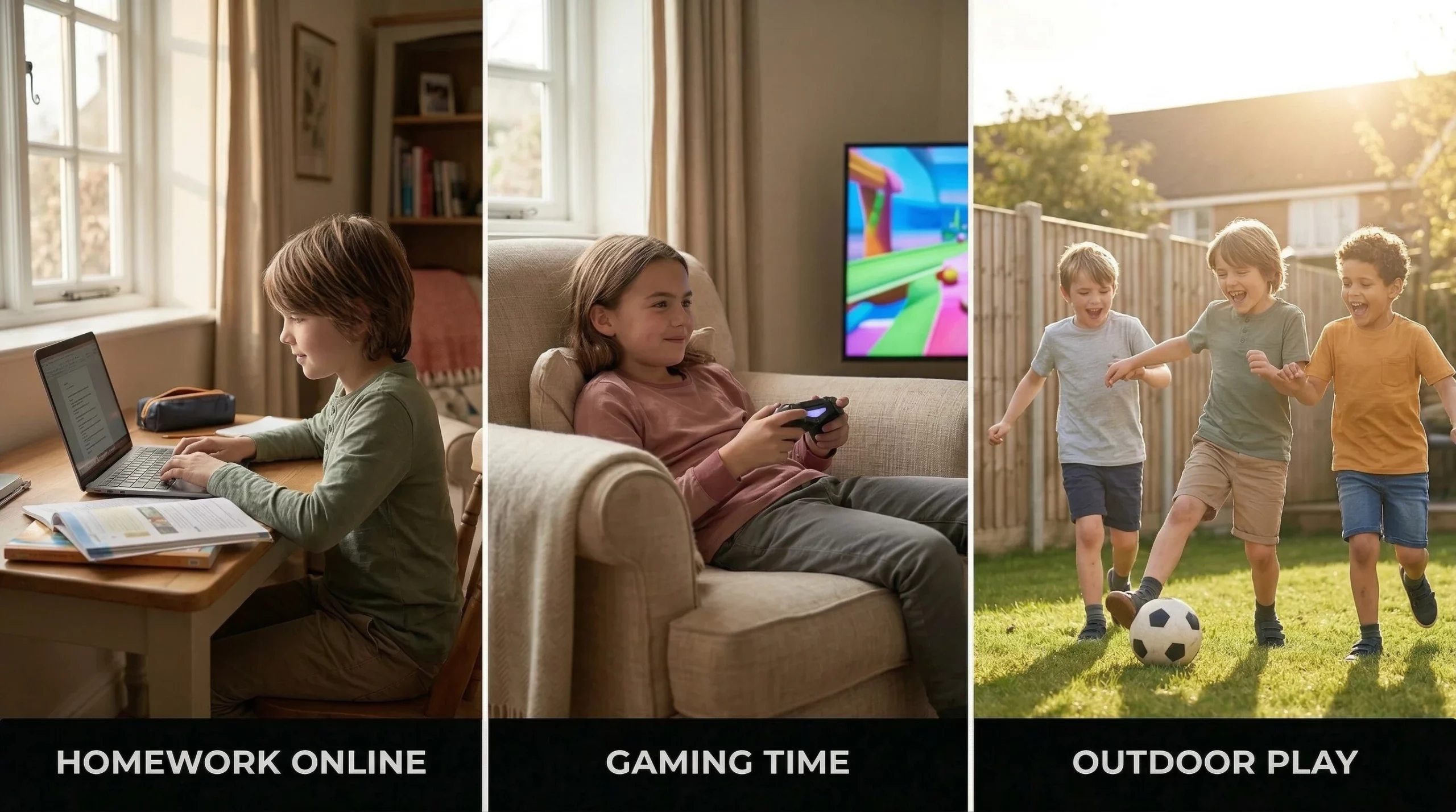
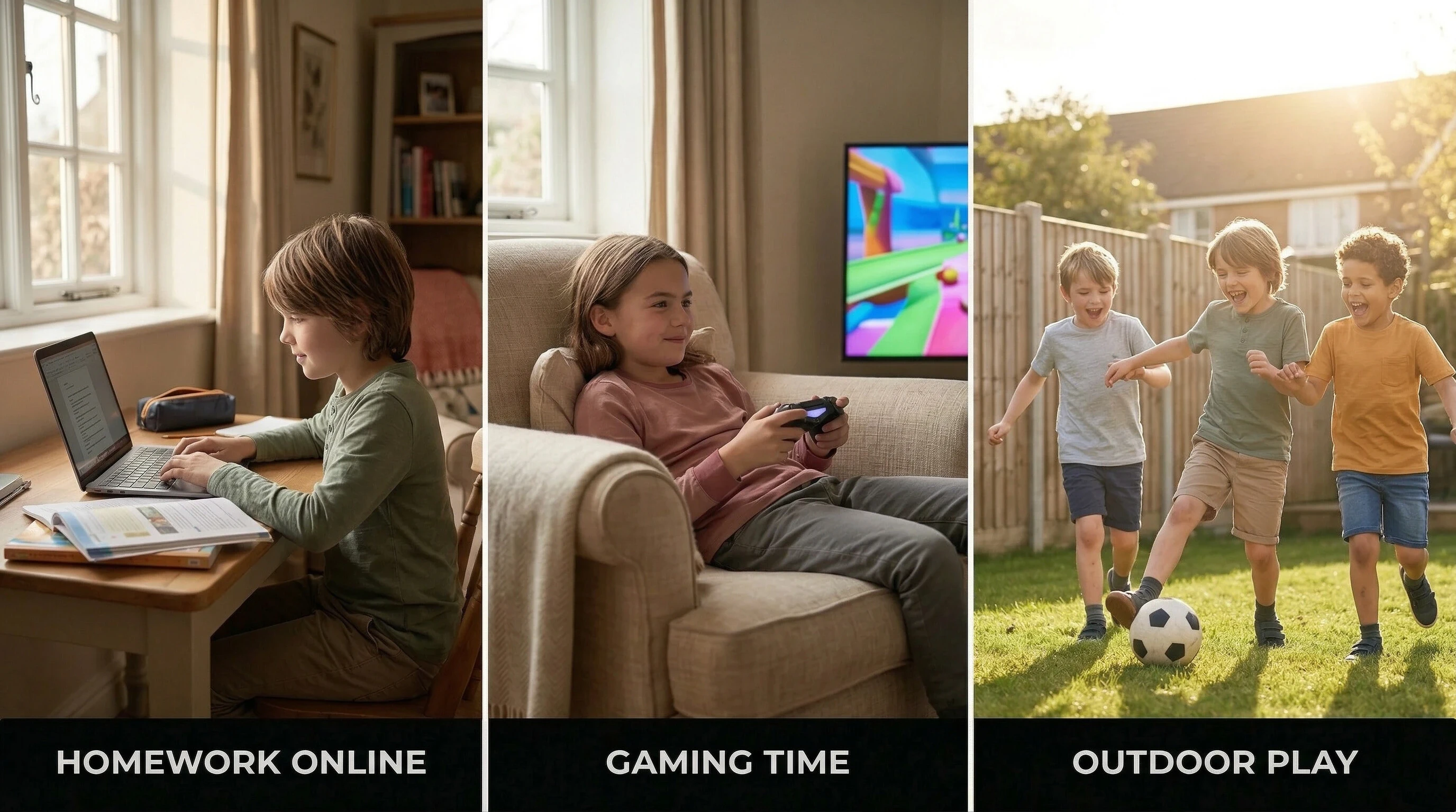
Once children start school, screen time often increases — and that isn’t necessarily a cause for alarm. Tablets and smartboards are used in classrooms. Homework might be online. Friendships may start to involve games, videos, and messages. That doesn’t mean screens are suddenly “good” or “bad” — it just means they’ve become a genuine part of your child’s world.
So how can you guide your primary-aged child towards healthy habits, without it turning into a daily battle?
What’s Changing in This Age Group?
From around 5 to 11 years old, children begin to develop in ways that change how they relate to screens. They start to:
- Develop stronger preferences and a growing sense of independence
- Get drawn into games, videos, or apps that can quickly eat up time — often without realising it
- Use screens for both learning and entertainment, sometimes in the same session
- Compare their screen access with friends (“But everyone in my class plays that!”)
- Begin to push back against rules they didn’t have a say in making
This is also the age when routines and boundaries can make a real difference. Children in this stage still benefit enormously from adult guidance — they want more independence, but they’re not yet fully equipped to manage time or self-regulate without support. That tension is completely normal, and understanding it can make your approach feel less like policing and more like parenting.
Setting Clear but Flexible Rules
Rather than focusing on a strict daily time limit, it often helps to think in terms of daily balance and priorities. A useful framework might look something like this:
- Homework and reading come first
- Physical activity or outdoor play before screens where possible
- Screens limited to certain times or places — not before school, not in bedrooms, not during meals
- Some days can be screen-free, especially at weekends or during holidays
- Wind-down time before bed stays screen-free
One of the most effective things you can do at this age is involve your child in creating the family screen rules. When children have a say in setting the boundaries, they’re far more likely to respect them — and far less likely to feel that rules are something imposed on them rather than agreed together.
Watch for Content and Context
Not all screen time is equal, and this becomes increasingly important as children grow. A child creating a stop-motion animation, experimenting with Scratch to build a simple game, writing a story using a word processor, or exploring an educational app is engaging very differently from one scrolling through endless videos.
It’s worth asking yourself three questions about your child’s screen use:
- What are they doing? Is it creative, active, passive, social, or simply something they’re watching without much thought? Are they making something, or just consuming?
- Who are they watching or interacting with? Are they connecting with known friends, or are strangers involved? Are they being exposed to advertising, in-app purchases, or content intended for older audiences?
- How do they seem afterwards? Do they come away energised and happy, or grumpy, glazed, and hard to reach?
That last question is often the most telling. A child who regularly seems unsettled after screen time is giving you useful information — not necessarily about the amount of time, but about the type of content or the context around it.
A Note on Our Own Habits
It’s worth remembering that children take their cues from us. Most adults know how easy it is to slip down a YouTube, Facebook, or Instagram rabbit hole — time disappears, and the thing we meant to do still hasn’t happened. Our own relationship with screens shapes the family rhythm just as much as anything we ask of our children.
This isn’t about guilt. It’s about recognising that modelling matters. If children see adults putting phones down during meals, choosing a walk over a scroll, or switching off the television and picking up a book, those habits quietly become part of what’s normal in your home.
Online Safety at This Age
Primary school is also the time to start building the foundations of good digital habits — not just around time, but around safety and behaviour online. Children in this age group may be:
- Playing multiplayer games where they can interact with strangers
- Watching content on platforms like YouTube where recommendations can lead them away from age-appropriate material
- Beginning to use messaging apps or platforms designed for older users
Open, non-alarmist conversations work far better than blanket bans. Let your child know they can come to you if something online makes them feel uncomfortable, confused, or upset — and make sure they know they won’t be in trouble for telling you. That trust is worth building early.
Practical Tips for Healthier Screen Use
- Use timers or visual aids to help your child understand and manage time limits — a visual countdown can feel fairer than a sudden “turn it off now”
- Create screen-free zones: the dinner table, bedrooms at night, and the car on shorter journeys are good places to start
- Offer genuinely appealing alternatives — puzzles, building kits, outdoor activities, or creative supplies within easy reach
- Model the habits you’d like to see, as often as you can
- When conflict arises around screens, try to stay curious rather than confrontational — “Tell me what you’re playing” often opens more doors than “You’ve been on that thing long enough”
Signs to Watch For
Most children will push against screen boundaries at some point — that’s normal. But if you’re noticing a persistent pattern of any of the following, it may be worth a closer look:
- Screens dominating your child’s interests to the exclusion of most other activities
- Strong emotional reactions — beyond normal disappointment — when screens are switched off
- Secretive behaviour around devices, or asking repeatedly to use devices unsupervised
- A noticeable change in mood, sleep, or friendships that seems linked to screen use
We’ll explore how to respond to these situations — including the trickier conversations — later in the series.
Coming up in Part Four: Screen Time and Teenagers — Social Media, Gaming, and Independence