
Screen Time: A Parent’s Guide (Part 2)
This article is part of the Screen Time: A Parent’s Guide series. If you missed the beginning, you can read Part 1 here: Why Screen Time Matters.
What’s helpful, what’s harmful, and what’s realistic for under-7s
If you’re the parent of a toddler or young child, chances are you’ve already faced the screen time dilemma. Maybe your toddler adores a certain cartoon, or you’ve found that a few minutes of phone time buys you enough peace to make dinner or have a shower. And maybe, like many parents, you sometimes wonder: Is this okay? Am I doing harm?
You’re asking the right questions — and the fact that you’re asking them says a great deal about the kind of parent you are. The early years feel especially high-stakes because they matter so much, and it’s natural to want to get it right.
The truth is, screen time isn’t all bad — but how and when it’s used matters enormously, especially in the early years when children’s brains and habits are developing rapidly.
What Young Children Really Need
Young children learn best through hands-on experiences, face-to-face interaction, and physical play. Activities like building with blocks, singing, listening to stories, or playing outside help develop everything from motor skills and imagination to language and emotional understanding.
This isn’t about screens being the enemy — it’s about making sure they don’t crowd out the things that matter most. A young child who spends large chunks of their day in front of a screen has less time for the messy, exploratory, wonderfully unpredictable play that builds their developing brain.
While screens can be entertaining — and even educational — they don’t replace these real-world experiences. Excessive screen time in the early years can:
- Crowd out active play and sleep
- Reduce opportunities for social learning and conversation
- Contribute to overstimulation or frustration, especially when screens are hard to switch off
- Slow language development if it replaces back-and-forth interaction with caregivers
That’s why experts generally recommend keeping screen time to a minimum for children under 2 — with the exception of video calls with family — and choosing high-quality, age-appropriate content for preschoolers and older children.
A Practical Approach
Of course, real life doesn’t always match the ideal. Parents need breaks. Long car journeys happen. Sometimes the television is a genuine lifeline during an illness or a particularly tough day. Feeling guilty about those moments won’t help anyone — you or your child.
The goal isn’t perfection. It’s balance, and a little self-awareness and self-compassion along the way.
Here are some practical tips for managing screen time with young children:
- Think of screens as a tool, not a default. A short programme can be genuinely useful if it gives you time to do something important — but try to reach for screens intentionally rather than automatically when your child is bored or restless.
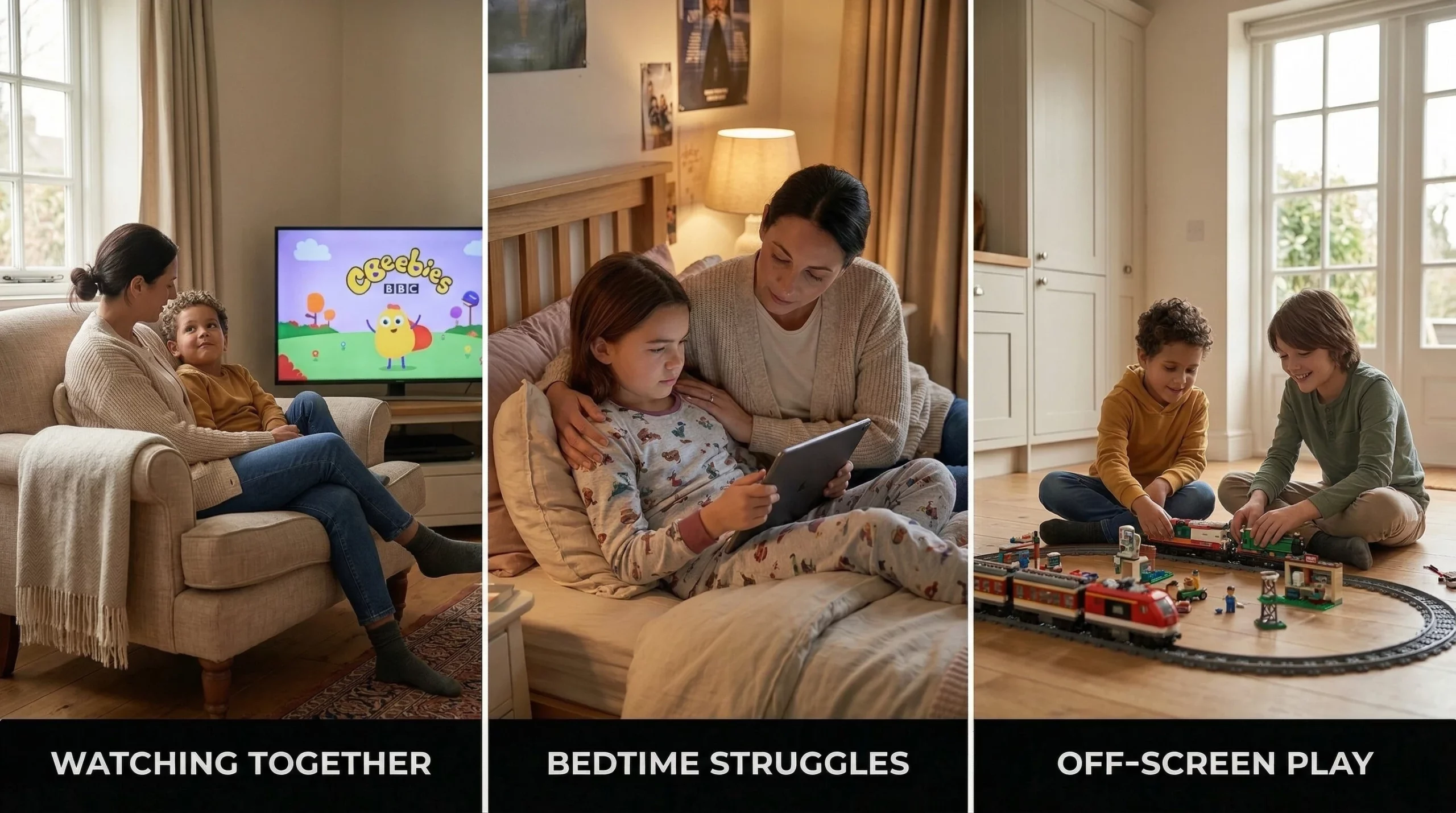
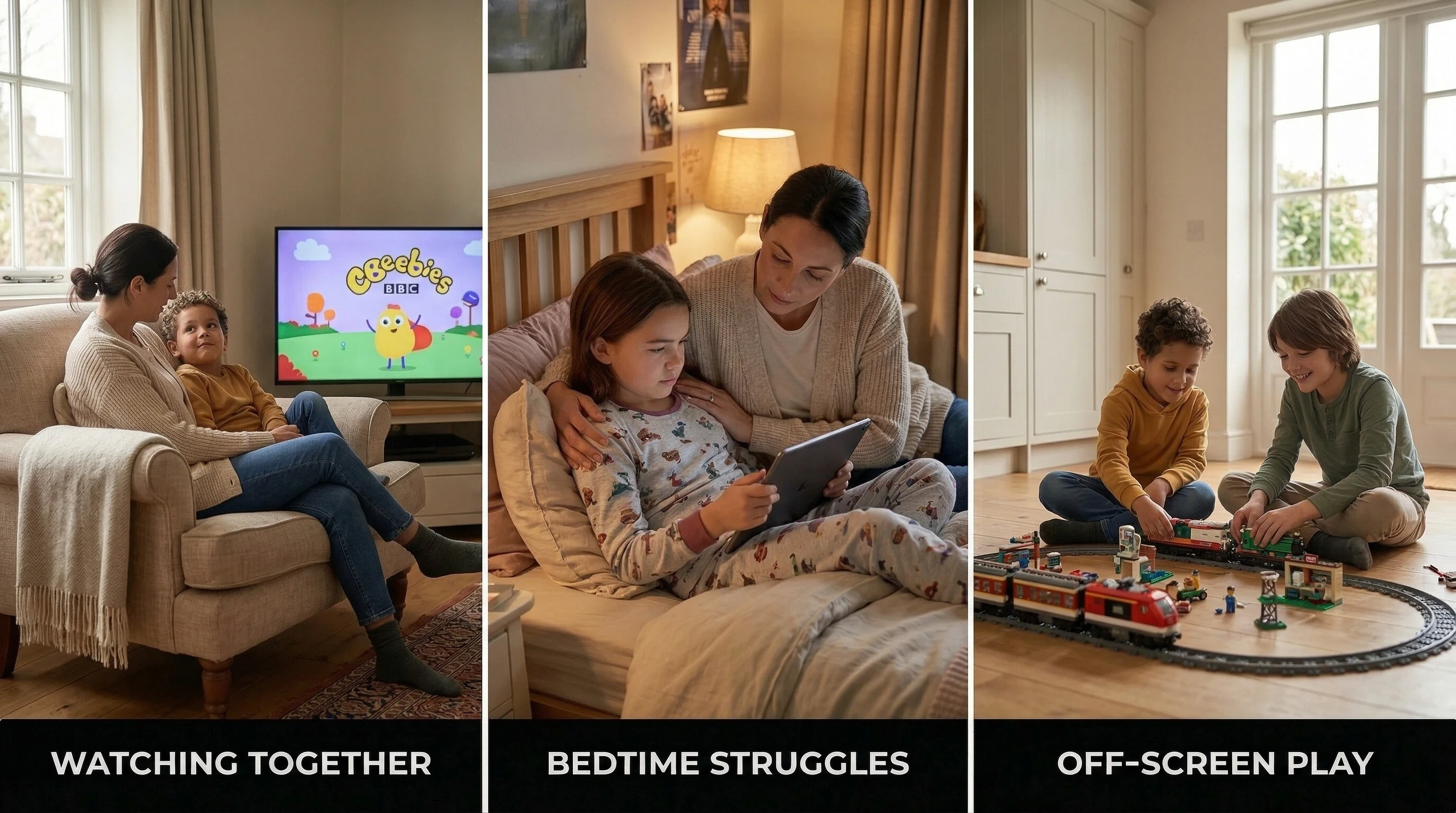
- Watch together when you can. Co-viewing helps your child learn more and gives you natural opportunities to talk about what you’re seeing together. Even a few comments — “Oh look, what’s she doing?” — make a real difference.
- Be mindful of timing. Screens before bedtime can make it harder for young children to wind down, as the light and stimulation signal to their brain that it’s still time to be alert. Try to build in a screen-free wind-down period in the hour before sleep.
- Choose interactive content. Programmes that encourage singing, dancing, or responding to questions tend to be far better for learning than purely passive shows.
- Set a simple routine around screens. Young children thrive on predictability. Knowing that screens happen at certain times — and not others — can reduce the battles and make transitions easier for everyone.
What About Educational Apps and Programmes?
Not all screen time is equal. A well-designed app that encourages problem-solving or teaches phonics is quite different from an endless stream of unrelated YouTube videos. When choosing content for young children, look for:
- A slow pace with time to respond and reflect
- Familiar, consistent characters who model positive behaviour
- Content that connects to real-world experiences — animals, nature, feelings, everyday routines
- Apps or programmes that involve the child actively, rather than just watching
If in doubt, the name of a trusted broadcaster or a recommendation from another parent is a good starting point. For example, CBeebies staples like Yakka Dee and Andy’s Dinosaur Adventures are excellent for preschoolers, while CBBC classics such as Blue Peter, Deadly 60, and The Dengineers offer educational value for primary‑age children.
Signs It Might Be Too Much
It can be hard to know when screen use has tipped from helpful to problematic. Some signs worth paying attention to include:
- Frequent or intense tantrums when screens are turned off
- Repeatedly asking for screens, or refusing to engage with other activities without them
- A noticeable loss of interest in physical play, toys, or spending time with other children
- Seeming glazed, irritable, or unsettled after screen time rather than calm and content
- Meals, bedtime, or homework becoming harder to manage because of screen use.
One or two of these on a hard day doesn’t mean crisis — but if you’re noticing a pattern, it may be worth gently pulling back and rebuilding other routines. We’ll look at how to do that — without the battles — later in the series.
A Word on Comparison
It’s easy to feel judged, or to judge yourself, when you see other families apparently doing it differently. Some parents seem to have screen-free children who happily entertain themselves for hours; others are more relaxed and that works fine for them too. What matters isn’t what anyone else is doing — it’s whether your child is happy, sleeping, playing, and connecting with the people around them.
Those are the things worth watching. Not what other parents are doing.
Coming up in Part Three: Screen Time and Primary-Age Children — Homework, Gaming, and Finding the Balance