
Screen Time Series: A Parent’s Guide Part Six
When Screen Time Becomes a Problem — Signs to Watch For and How to Help
Staying calm, consistent, and connected when screen time causes concern
Screen time is one of the most common sources of family conflict today — and it’s no wonder. Screens are designed to be absorbing. Children don’t want to switch off, and parents often feel torn between keeping the peace and holding the boundaries they know matter.
But there’s a difference between the everyday friction of ending screen time and something more serious developing. This part of the series looks at both — how to handle the daily struggles with calm and consistency, and how to recognise when screen use might be becoming a deeper problem that needs a different response.
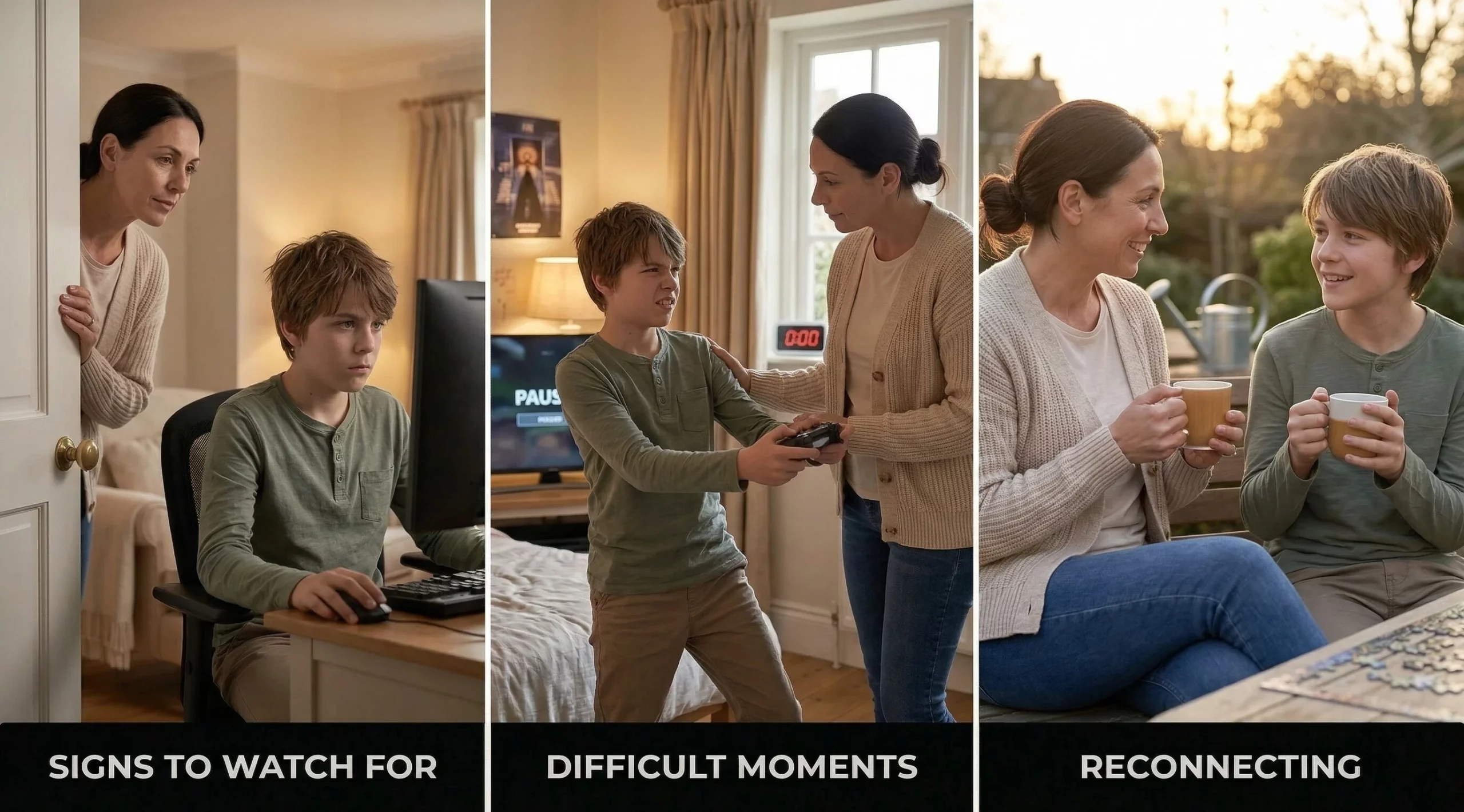
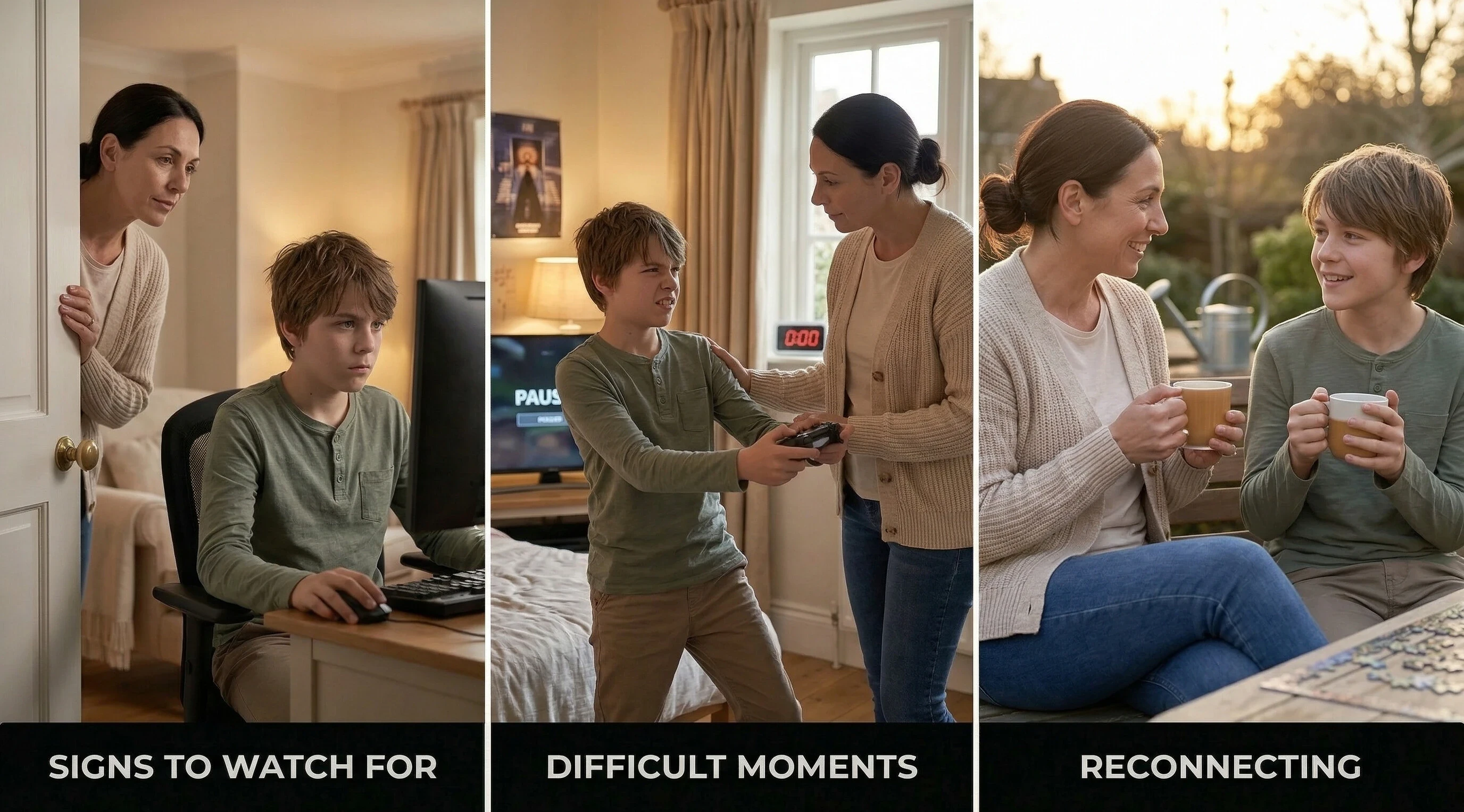
Signs That Screen Use May Be Becoming a Problem
Most children will protest when screens are switched off. That’s normal.
But sometimes patterns start to shift. There are signs that go beyond ordinary reluctance, and it’s worth knowing what to look for:
- Intense or disproportionate reactions when screens are turned off — rage, tears, or distress that seems out of proportion to the situation
- Preoccupation with screens even when not using them — constantly talking about games or content, planning the next session, or seeming unable to settle to anything else
- Withdrawal from real-life activities and relationships — losing interest in hobbies, friends, sport, or family time that they previously enjoyed
- Declining school performance or difficulty concentrating, particularly if it’s a recent change
- Sleep disruption — staying up late to use screens, difficulty falling asleep, or seeming tired and flat during the day
- Mood changes linked to screen use — irritable, anxious, or low when not on screens, and noticeably different when they are
- Secretive behaviour — hiding devices, using them after agreed times, deleting history, or becoming defensive when asked about online activity
- Using screens to cope with difficult emotions, stress, or social problems rather than developing other ways to manage
None of these signs on their own necessarily means there’s a serious problem — context always matters. But if several are present, or if you’ve noticed a pattern developing over weeks rather than days, it’s worth taking seriously.
Why Screen Time Can Become Such a Problem
Understanding what’s driving the conflict can help you respond with empathy rather than frustration:
- Transitions are genuinely hard. Moving from something absorbing and rewarding to something ordinary takes effort, especially for younger children whose self-regulation is still developing.
- Screens are engineered to be compelling. Games, social media, and video platforms are designed by teams of specialists to maximise engagement and make stopping feel difficult. This isn’t a character flaw in your child — it’s intentional design.
- Screens feel personal to older children and teens. Their online world is part of their social and emotional life. Boundaries around it can feel like an intrusion, not a kindness.
- Parents are under pressure too. It’s entirely human to reach for a screen to buy a moment’s peace — and then feel uncertain or guilty about it later. That internal conflict can make it harder to hold boundaries calmly.
Before the Conflict: Prevention Matters
The most effective time to manage screen conflict is before it starts:
- Set clear rules and routines so expectations are known in advance
- Give generous warnings before screen time ends — “Ten more minutes, then we’re switching off” — so the ending doesn’t feel sudden or unfair
- Use visual timers or countdown clocks for younger children, so time becomes concrete rather than abstract
- Keep screen time predictable — the same times, the same places, the same expectations day to day
- Allow some flexibility at weekends or during holidays, but name it in advance so it doesn’t become the new normal
- Avoid starting screen time when you know it will need to end abruptly — a rushed twenty minutes before school is often a recipe for conflict
During the Conflict: Stay Calm and Kind
When conflict does happen — and it will — how you respond in the moment matters more than winning the argument:
- Keep your tone neutral but warm: “I know it’s hard to stop, but we agreed on thirty minutes.”
- Acknowledge the feeling without giving in to it: “You’re really into that game, and it’s annoying to have to stop. I get it.”
- Avoid lectures, threats, or lengthy justifications in the heat of the moment — they tend to escalate rather than resolve
- Stay physically close rather than confrontational — sometimes simply sitting beside a younger child while they finish can ease the transition
- If your child lashes out, resist the urge to respond immediately. Give everyone space to calm down, then return to it when the temperature has dropped
It’s worth remembering that holding a boundary firmly and kindly, even when your child is upset, is not unkind. It’s one of the most useful things you can do for them.
After the Conflict: Reflect, Reconnect, and Reset
Once things have settled, a calm follow-up conversation is far more effective than punishment or prolonged tension:
- Talk about what happened without blame: “That was a tough moment earlier. How are you feeling now?”
- Ask what might help next time: “Would an earlier warning make it easier?” or “Shall we write the rules somewhere we can all see them?”
- Acknowledge any small steps in the right direction: “You switched off without a big argument today — I noticed that, and I appreciate it.”
- Remind your child, gently, that the boundaries come from care rather than control — and mean it
When to Step Back and Reassess
If screen-related conflict is happening daily, or with an intensity that affects your family’s wellbeing, it may be time to step back and look at the bigger picture:
- Is the content appropriate? Fast-paced, competitive, or violent games can heighten arousal and make stopping much harder
- Could something else be going on? Screens are often used to cope with anxiety, loneliness, social difficulties, or academic pressure. If that’s the case, addressing the underlying issue matters more than the screen limit
- Are the boundaries themselves realistic and consistent? Rules that shift depending on the adult or the day are harder for children to accept
- Would involving your child in redesigning the boundaries help? Sometimes resistance eases when children feel genuinely heard
When to Seek Support
Most screen conflict is normal family life. But if you’re seeing several of the warning signs described at the start of this part, or if your child’s screen use is significantly affecting their sleep, friendships, schoolwork, or mental health — and your conversations aren’t gaining traction — it’s reasonable to seek outside support.
Your GP, your child’s school, or a family therapist can all be useful starting points. In the UK, organisations such as the NSPCC and Young Minds offer guidance for parents navigating digital wellbeing concerns. You don’t have to reach a crisis point before asking for help.
You’re Not Alone
Even the calmest, most consistent households have screen battles. What matters most is not whether conflict happens — it will — but how you respond to it over time. Every difficult moment handled with patience and warmth is teaching your child something valuable about managing frustration, respecting boundaries, and working things out.
Children rarely thank you for rules in the moment. But over time, steady boundaries and genuine connection help them develop into thoughtful, balanced people — online and off.
Coming up in Part Seven: Screen-Free Weekends — How A Short Break Can Make A Big Difference